(By Dr Surjit Singh Bhatti, Calgary)
“Sultan-ul-Quam” Nawab JassaSingh Ahluwalia (1718–1783) was a prominent Sikh Ruler who rose to power during the period after the death of the brave Sikh General Baba Banda Singh Bahadur. He was the General who laid the foundations of the powerful Sikh Empire established in 1801 by Maharaja Ranjit Singh (1780-1839). There were 12 independent Sikh confederacies (called Missals), at that time that were always engaged in skirmishes among themselves for gaining supremacy. Sardar Jassa Singh was Jathedar (Chief or Baron) of the Ahluwalia Missal. To fight against the ruthless and much more powerful invaders from Afghanistan, these Missals created a strong and united force, called Dal Khalsa, and chose Ahluwalia as their Supreme Military Commander in 1748. He was also elected leader of the Buddha Dal, which was the Think Tank of this formidable force, its other militant group being the Taruna Dal. He was given the title of ‘Nawab‘, at Amritsar in 1754, after the death of his mentor Nawab Kapur Singh, Chief of Singhpuria Missal.
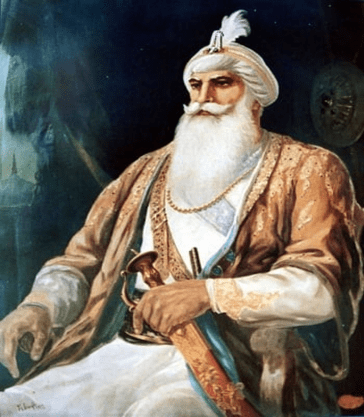
As a lad, Jassa Singh Ahluwalia was noticed by Nawab Kapur Singh who was highly impressed by his unique qualities. He adopted the young man and started grooming him in the art of war, horse riding, swordplay and archery. During 1747-1769, Ahmad Shah Abdali, the Ruler of Afghanistan, attacked and looted parts of Northern India, nine times. Every time, it was only Dal Khalsa who gave him a strong challenge and forced him to retreat.
Under the leadership of Nawab Jassa Singh Ahluwalia, the Sikhs rebuilt their holy place of worship, Darbar Sahib, Amritsar, which was destroyed by Abdali during his repeated revengeful attacks. Ahluwalia also started the work of building Darshani Deori, the main entrance route to Darbar Sahib. As a brave military commander and strategist, he captured Lahore in 1761, for which Sikhs honoured him with the title of Sultan-ul-Qaum (King of the Nation).
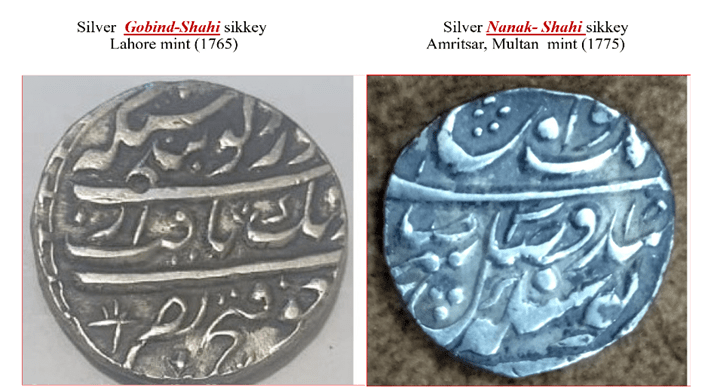
After capturing Lahore, he set up three Mints, first at Lahore, from where silver coins were issued in the name of Guru Gobind Singh Sahib (Gobind-shahi Sikkey). The other two were established at Multan and Amritsar which made Nanak-shahi Sikkey. The Amritsar Mint (in Katra Hari Singh) subsequently produced both types of coins. Later, silver and gold rupee coins featuring a Katar (and other Sikh weapons) were also issued from Amritsar.
Ahmad Shah Abdali and his Indian allies mounted a fierce attack on the Sikhs for the sixth time in February 1762, with the avowed aim of annihilating them completely. Ahluwalia and other Chiefs of the Missals fought valiantly and were seriously injured. Abdali carried out a full-scale massacre and more than 20,000 Sikhs died, leading to a “Wadda Ghallughara” (The Great Holocaust). Despite this disaster, in May 1762, the Sikhs gathered in large numbers at Amritsar. Abdali proposed a treaty of peace, but the Sikhs rejected the idea, which led to a battle at Amritsar. This was followed by another battle in October of the same year. These battles ended in the defeat of the mighty Afghan army. Nawab Jassa Singh captured a large portion of Abdali’s troops and forced them to repair the holy Sarovar damaged by them at Amritsar earlier. The Sikhs inflicted a humiliating defeat on Abdali and forced him to retreat, with five thousand Afghan soldiers killed. The Prisoners of war and women captured by Abdali were rescued by the Sikhs and sent to their homes.
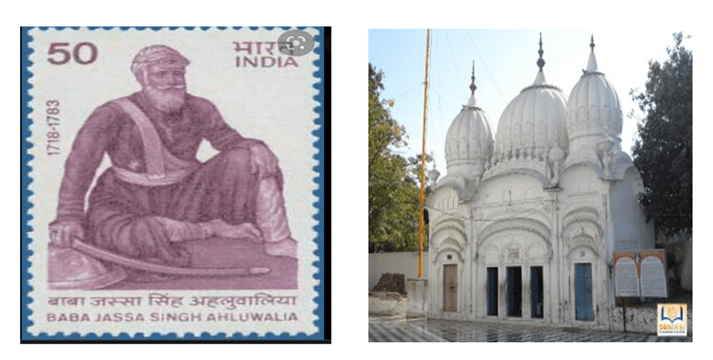
(Postage stamp and Memorial in honour of Nawab Jassa Singh Ahluwalia)
After Abdali’s ninth and last invasion in 1769, Nawab Jassa Singh Ahluwalia wrested Kapurthala and nearby territories (of Jalandhar, Phagwara and Hoshiarpur) and added these to Lahore and Amritsar already under his rule. In March 1783, the Sikhs, led by General Baghel Singh of the Karorasinghia Missal, captured the Red Fort at Delhi. Nawab Jassa Singh Ahluwalia and General Jassa Singh Ramgarhia were among the commanders who helped General Baghel Singh in this historic campaign. These victorious Generals made seven memorial Gurdwaras at the historic places in Delhi associated with the Gurus. Sardar Jassa Singh Ahluwalia died at Amritsar in October 1783. He was succeeded by Sardar Bhag Singh Ahluwalia, whose son, Fateh Singh served in the army of Maharaja Ranjit Singh. He spent his last days renovating Gurdwaras and developing Amritsar city. A memorial was built in his honour in the surrounding parikrama of Gurdwara Atal Rai. In 1985, the Government of India issued a commemorative postage stamp in his memory.
 ਸਾਂਝੀ ਵਿਰਾਸਤ
Helpful Information.🙏
LikeLike
Thanks
LikeLike